
1. Build a Balanced Plate Every Time You Eat
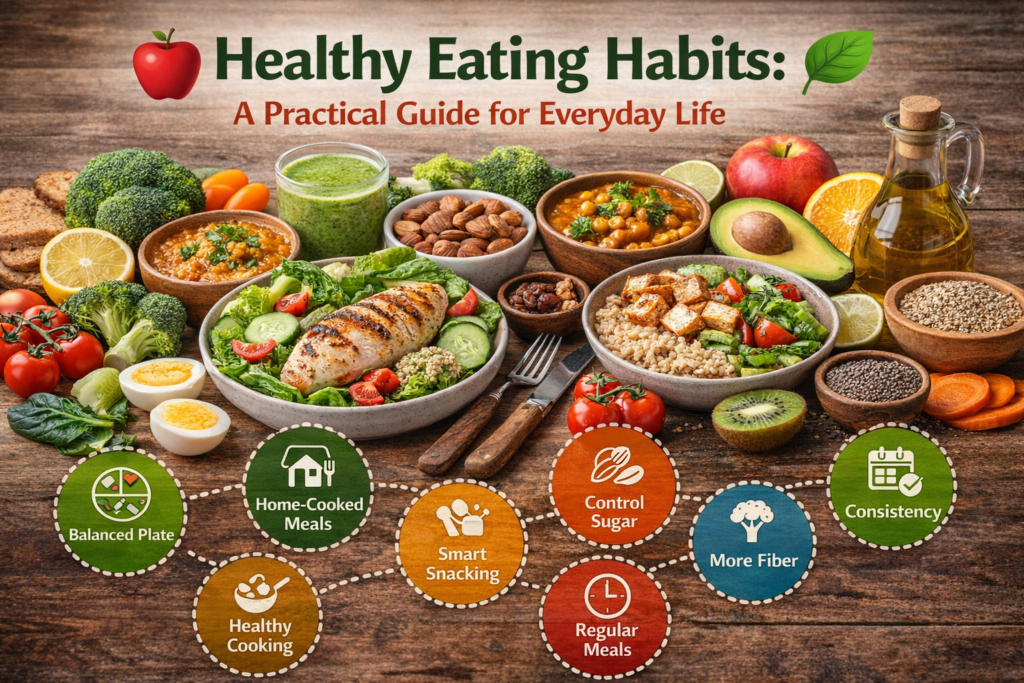
A healthy diet starts with balance, not restriction. Instead of focusing on eliminating foods, aim to create a balanced plate that includes carbohydrates, protein, healthy fats, and fiber. For example, combine whole grains like brown rice or roti with a protein source such as lentils, paneer, or chicken, and add a generous portion of vegetables. This balance helps stabilize blood sugar levels, keeps you full for longer, and provides sustained energy throughout the day. When your meals are well-balanced, you naturally reduce cravings and avoid overeating.
2. Prioritize Home-Cooked Meals Over Outside Food
Home-cooked meals give you full control over ingredients, portion sizes, and cooking methods. Outside food often contains excess oil, salt, and hidden sugars, which can harm your health over time. Cooking at home doesn’t have to be complicated—simple meals like dal, rice, sabzi, or grilled dishes can be both nutritious and delicious. Making home-cooked food a daily habit can significantly improve your overall health and help you maintain consistency in your diet.
3. Snack Smart Instead of Eating Junk Food
Snacking is not unhealthy if done right. The problem arises when we choose processed snacks like chips, biscuits, or sugary drinks. Instead, opt for healthier alternatives such as nuts, fruits, yogurt, or roasted chana. These options are rich in nutrients and keep your hunger in check without adding empty calories. Smart snacking helps maintain energy levels between meals and prevents overeating during main meals.
4. Control Sugar Intake for Better Health
Excess sugar consumption is one of the biggest contributors to weight gain and lifestyle diseases. Many packaged foods and beverages contain hidden sugars, which can be harmful if consumed regularly. Try to reduce your intake of sweets, soft drinks, and processed desserts. Instead, satisfy your sweet cravings with natural sources like fruits or dates. Gradually cutting down sugar can lead to better energy levels, improved skin, and overall well-being.
5. Don’t Skip Meals, Especially Lunch
Skipping meals may seem like a quick way to lose weight, but it often leads to overeating later. Regular meals help maintain stable energy levels and prevent sudden hunger spikes. Lunch is especially important as it fuels your body for the rest of the day. Eating on time supports proper digestion and keeps your metabolism active. Make it a habit to have at least three balanced meals daily.
6. Add Fiber-Rich Foods for Better Digestion
Fiber plays a crucial role in maintaining a healthy digestive system. Foods rich in fiber, such as vegetables, fruits, whole grains, and legumes, help prevent constipation and improve gut health. Fiber also helps you feel full for longer, reducing unnecessary snacking. Including fiber in your daily meals is a simple yet effective way to improve your overall health and maintain a healthy weight.
7. Maintain a Healthy Cooking Style
How you cook your food matters just as much as what you eat. Deep frying and excessive oil usage can turn even healthy ingredients into unhealthy meals. Instead, choose cooking methods like boiling, steaming, grilling, or sautéing with minimal oil. Using natural spices and herbs can enhance flavor without adding extra calories. A healthy cooking style ensures that your meals remain nutritious and light.
8. Stay Consistent and Make It a Lifestyle
Healthy eating is not about short-term dieting but about long-term habits. Consistency is the key to achieving and maintaining good health. Instead of making drastic changes, focus on small, sustainable improvements in your daily routine. Allow yourself occasional treats, but keep your overall diet balanced. When healthy eating becomes a part of your lifestyle, it feels natural and effortless, leading to lasting results.